
Everything here · The whole house on one page
Everything in the Archive
Every room, chapter, theme front, index, and feature — presented whole, in the open.
The Archive holds more than any one visit finds: a reading room of newspapers, books, and journals; a theater and a listening room; a walk through the town's story; the fun fronts; paths for learning; and the indexes of its people, places, and years. It all stands below, grouped the way a visitor thinks — by what you came to do. Every name here is a door.
On this day
Friday, November 13, 2026
Today in the record: the day's own newspapers and dated facts, new every morning. Start the day the way the town did — with its papers.
- November 13, 1881 · The Daily Astoriankept by Library of Congress, Chronicling America
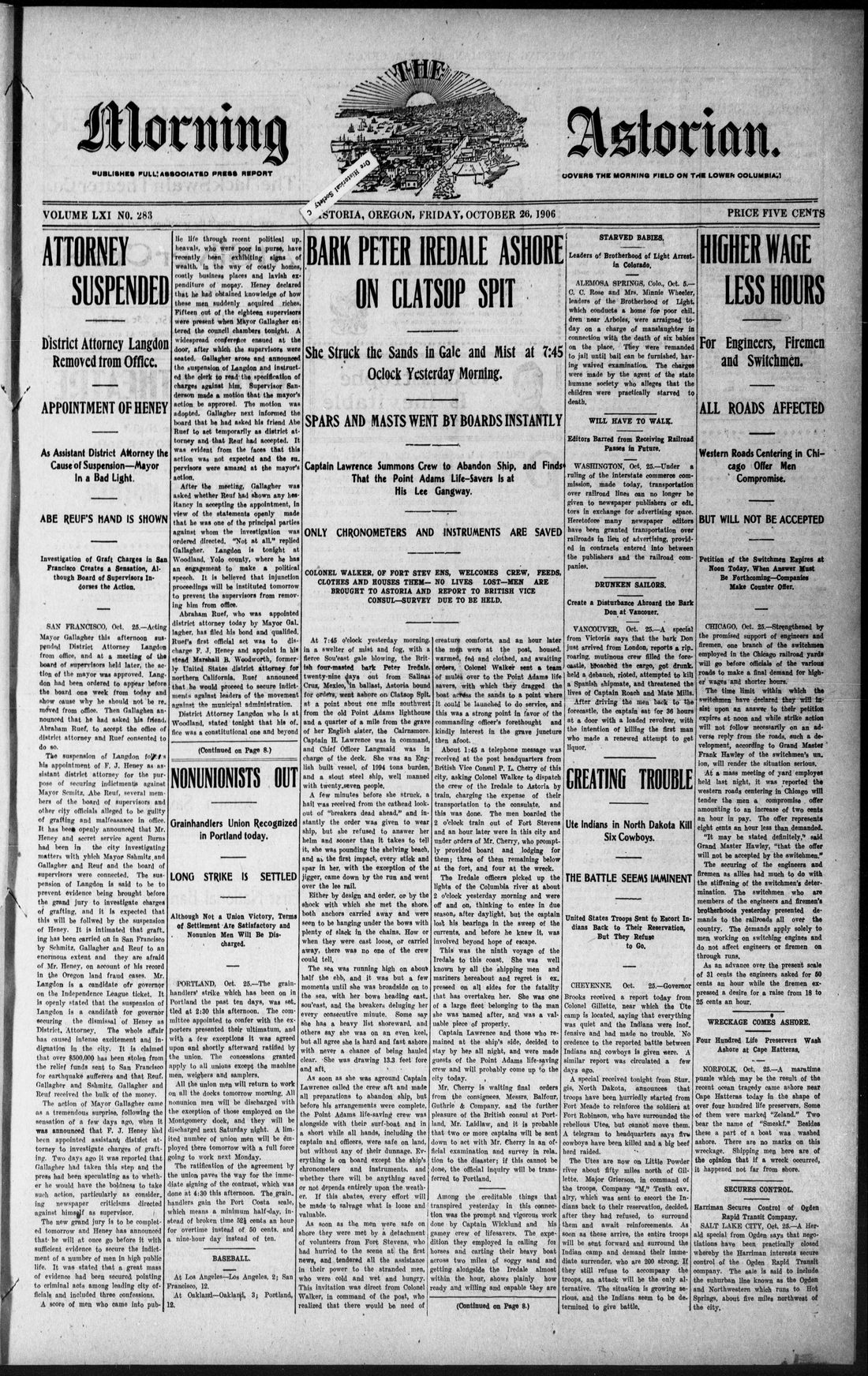
- November 13, 1906 · The Morning Astoriankept by Library of Congress, Chronicling America
- November 13, 1917 · Toveritarkept by Library of Congress, Chronicling America
The fun fronts
Sasquatch, Shanghai, and the stories told after dark→Legends and Lore, Dark Stories, Film and Books, and the town's singular souls: the cool, funky history, standing at the front in fan words — every telling labeled on its face for what it is. Delight is part of the record here.
Search and find
Start with a word, or with no word at all: the Desk, the open browse, the years, and one record drawn for you.
Everything the Archive carries — photographs, newspaper pages, films, and maps — in the open, to walk without a search word.
Show Me Something→One record, drawn at random from everything the Archive carries. Come back and draw again.
The Year Index→Every dated record, and the media kept under its year, in one index of years.
Look Closer→The pages and pictures the Archive carries whole, at full size: read the small print, sheet by sheet.
Read — the Reading Room
The written record, chapter by chapter. Every chapter below stands in the Reading Room today.
Astoria's surviving papers from 1873 to today, and where their whole runs stand.
The Books→The books this place wrote and the books written about it, at their holders.
Journals and First-Person Records→Diaries, letters, and accounts written by the people who were there.
The Lewis and Clark Journals→The expedition's own journals, read here: the Fort Clatsop winter, day by day.
The Journals at the Salt Works→The salt works of the expedition winter, inside the journals: salt boiled from the sea in 1806.
The Art Record→The art made of this place, and the record it left.
The Art Scene→The living art scene of the town today, inside the art chapter.
Poetry→The poems of this coast, and the poets who wrote them.
The Working Waterfront→Canneries, fishing, and the river at work: the chapter the photographs keep joining.
Houses and Builders→The houses of the town and the people who built them.
Maps, Photographs, and Records→How the town was drawn, photographed, and filed: the record about the record.
The Living World→The river, the forest, and the creatures: the living world of the record.
Watch and listen
The films of this place, shown here, and its voices at the archives that hold them.
The films of this place, shown here: the ones the public owns play whole, each with its program note.
The Listening Room→Voices, radio, music, and the spoken word, at the archives that hold them, and one story carried here.
The films the public owns, played here; the films other people own, linked at their holders.
The Record Around the Movies→The record the town kept around its films: what was made here, drawn from the state filmography.
Lost and Catalogued→Films nobody can watch, surviving as paper: the record of what was made here and lost, printed honestly.
Voices→Oral history: the town in its own voice, kept by the societies that recorded it; it plays at its holders, under their terms.
Radio→The town has talked to itself on the air since 1935; what survives in public stands here, its unevenness printed.
Music and Song→The songs this place made, FisherPoets' among them, at the archives that hold them.
The Spoken Word→Poems, testimony, and talks given voice, and the founding story carried here, read aloud.
Walk and browse
The town's story in order, the day's own record, and the pictures — for a visitor with no errand.
Every day of the year in the record: the day's dated facts, each with its source named, and the day's own newspapers.
On This Day→Today in the record: the day's own newspapers and dated facts, new every morning.
The Yearly Gatherings→The gatherings that come back every year, and the years each one can prove.
Photographs→Every photograph the Archive itself carries, credited under its frame.
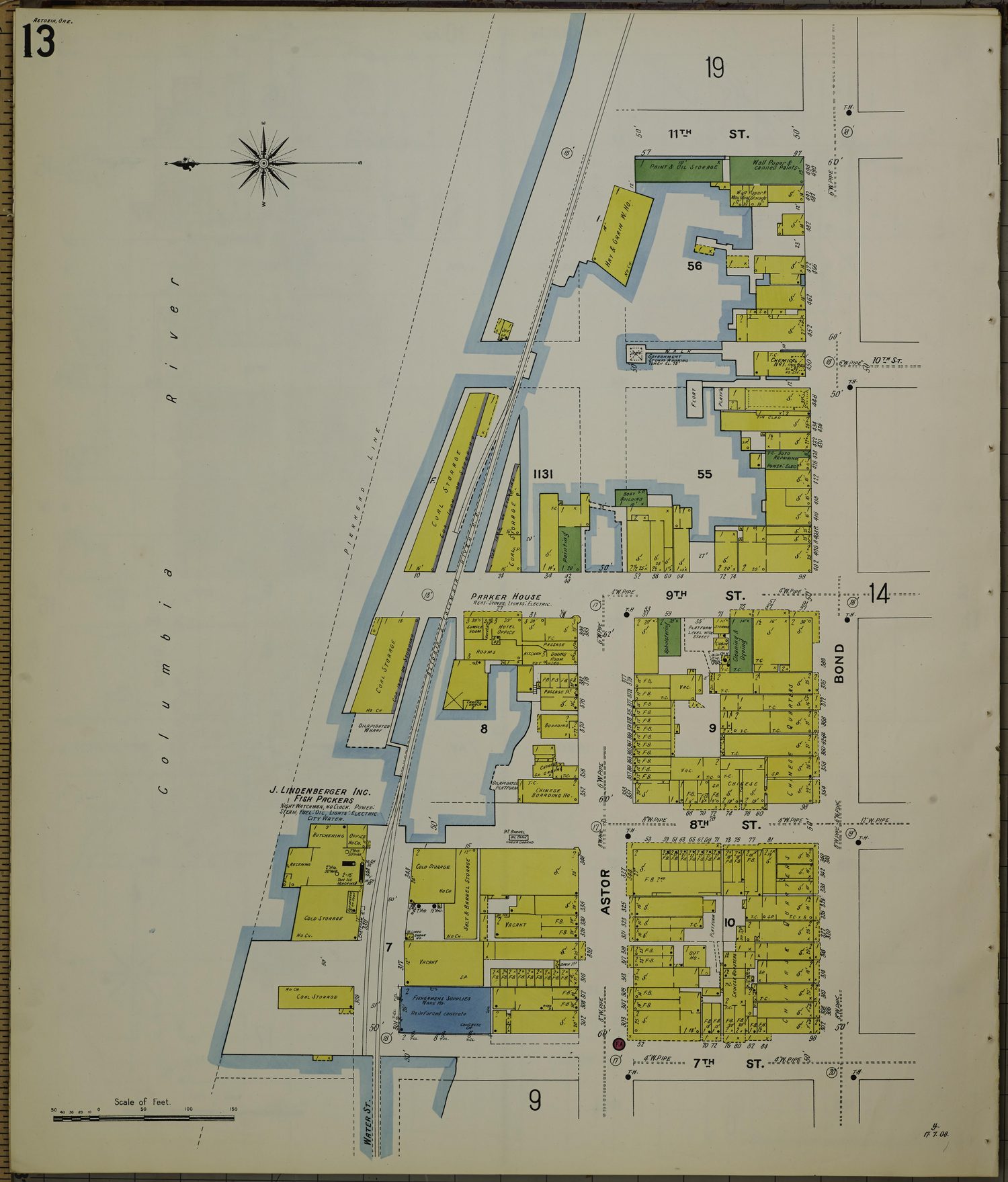
Maps, Up Close→Astoria's fire insurance sheets of 1888 and 1908, sheet by sheet, at full zoom.
Then & Now→The same ground at two times the record can prove, both pictures carried here.
Free to Use→The public-domain pictures gathered in sets, to print, frame, and use, each with its credit line.
The galleries, in order
The fun fronts
The town's stories, standing at the front in fan words — every telling labeled on its face for what it is.
Legends and Lore
The stories the town tells about itself, labeled as legend and loved as legend.
Sasquatch and the Lore→Real or legend? The wild man of the region, the stories told about him, and what the record actually holds, every one labeled on its face.
Sightings and Strange Encounters→Ape men at Ape Canyon in 1924, beings on the mountain in 1847, and the strange things the town's own newspapers printed: told as told, never as fact.
The Beeswax and the Buried Treasure→Wax stamped with Spanish marks, washing out of the Nehalem sand, and the chest said to be buried on Neahkahnie Mountain: part record, part legend.
Real or Legend→Sasquatch and the lore, the beeswax and the buried treasure, the sightings: the town's told record, labeled on its face as told.
Dark Stories
Shanghai stories, ghost stories, mysteries, and the underground: the town's dark material, each piece labeled for what it is.
Shanghai Stories→Men drugged, tricked, and dropped through trapdoors, waking at sea: the town's favorite dark story, told as folklore, with the documented trade standing beside it.
Scary, Haunted, and Ghost Stories→The stories the town tells after dark, each labeled as a telling, and the ghost words hiding in its own carried newspapers.
Mysteries→The record's open questions: films claimed for Astoria and not confirmed, a wreck whose cannon came out of the sand two centuries on.
Rum-Runners and the Prohibition Years→Thin in this record, and it says so: a brewery Prohibition closed, the county museum's exhibit on the era, and the river's told stories, labeled as told.
The Underground→Astoria's tunnels: the town tells them, the record fences them. Both sides stand here, each labeled.
Crime and the Underworld→Crime and the underworld, documented from the 1880s to the 1950s: the trade in unwilling sailors, the boarding houses, and the police photograph books.
Film and Books
A century of filming in this town, with the claimed films corrected beside the confirmed ones.
The Books of the Record→The books this place wrote and the books written about it: the town's fame in print, at the archives that hold it.
Interesting Facts and the Town's Stories
The Fact Cards, dealt one at a time: whole records, short enough to finish, strange enough to remember, each with its source named.
The Town That Burned Twice→July 1883 and December 1922: the two fires that took the wooden town, and the twenties rebuild that stands downtown today.
The Town's Singular Souls→The town's most singular lives, each with its record.
Wrecks: Graveyard of the Pacific→The river's mouth has taken ships for two centuries: the Iredale standing in the sand, the Shark that named a town.
Learn
Paths through the record, in the order the place itself sets, and the record set out for classrooms.
Packets built from the record, with their standards on their faces, ready for Monday.
For Students→The record set out for students: the cases, the Fact Cards, and how to cite it, plainly.
Cases for Kids→Real records worked as cases, at a child's height and a grown-up standard.
The paths, in order
- Native Nationsthe nations' own pages lead
- Chinese American Astoriathe canneries and Chinatown
- The Expedition Winter, 1805 to 1806from the journals themselves
- Astor and the Fur Tradethe post of 1811
- The Oregon Trail Ends at the Riverwhere the overland road ended
- The Finnish and Scandinavian Working Worldthe cannery shore
- The Fishermen and the Cannery Shorethe boats and the shore they worked
- Farms, Forests, and the Fairthe county fair
- The Bridge, and the Ferry It Endedthe bridge of 1966
- The Flavels and Their Housesthe houses they left standing
People, places, and names
Enter by a person, a place, or a family's paper trail: the record keeps returning to them because the town did.
The people whose records the Archive keeps, each with the years their records span.
Places→The places named in the Archive's records, each with the records tied to it.
Family Records→Directories, yearbooks, census and draft records, and the family-search collections, each with its reason printed.
Keep and carry
What you gather here stays yours: saved on this device, printed, or taken as a file.
What you have saved, on this device, with its citations ready.
Print→The print sheet for the library counter — today's fact and the day's papers — and print from every record.
The Record as a File→The Archive's own index as a file, made when you press the button, free to take and reuse.
Bring What You Have→A correction, a photograph, a memory: where what the town still holds comes in.
The keepers
What this place is, how it is made, and how it is kept honest.
A short welcome, the way a person at the desk would say it.
About this Archive→What this place is, who keeps it, and how it is kept honest.
How This Archive Is Made→How the records are gathered, carried, made searchable, and printed in two languages, told plainly.
Sources & Citations→How the Archive knows, and how to cite anything here.
Corrections→A correction is welcome at Bring What You Have: every record names its source, and the checking is part of the visit.
One house
Everything on this page stands in the Archive today. What the Archive does not hold, it names, tells you who holds it, and prints the reason — those doors stand in Sources & Citations. Nothing here is more than one tap from the Research Desk.